AI Influencers in Pakistan: Should Your Brand Use One in 2026?
By Admin · 10/29/2026
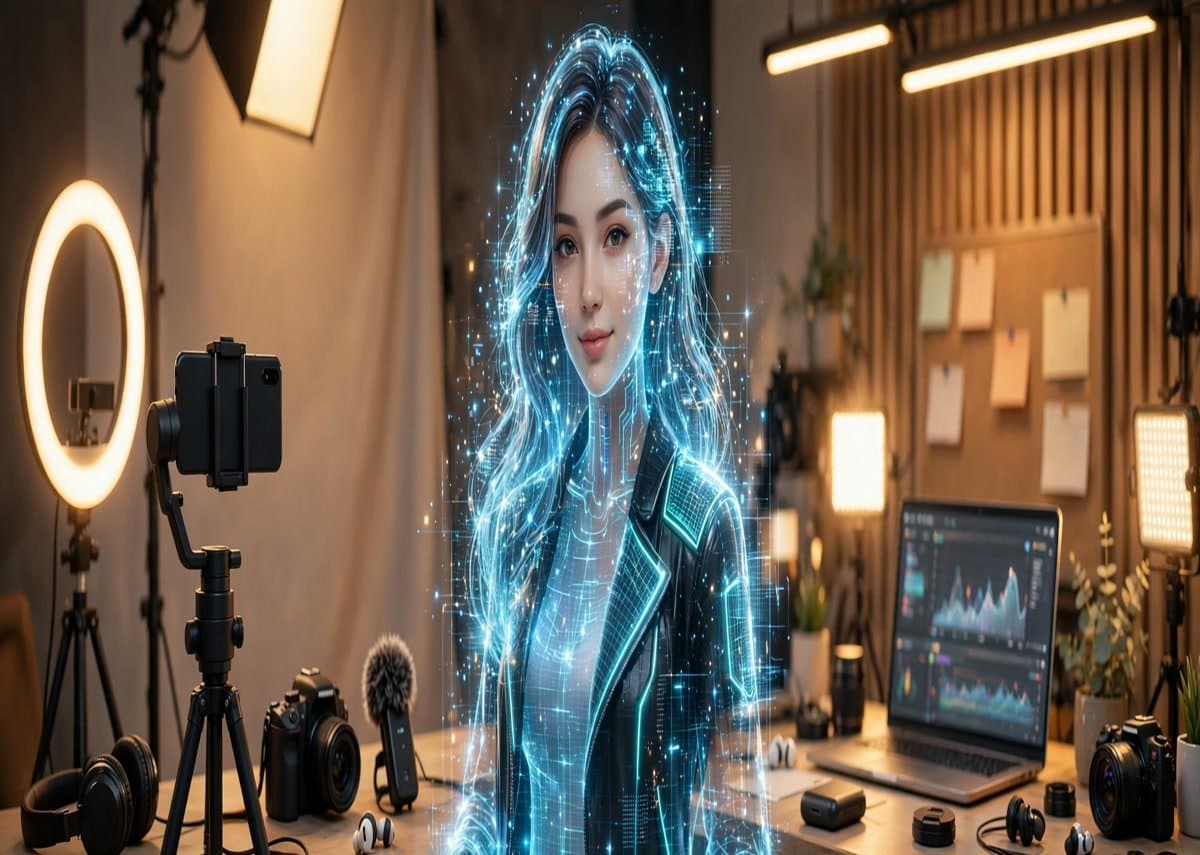
Scroll Instagram for ten minutes and you'll meet her: perfect skin, perfect lighting, a routine that never misses a day. She replies to comments and posts outfit reels. There's just one catch. She isn't real. AI influencers Pakistan brands are suddenly asking about are exactly that — computer-generated personas built to look and sell like human creators. Some are fully virtual characters with their own names and storylines. Others are digital twins of real people, licensed to post while the human sleeps. In 2026, they're showing up in ad campaigns and Pakistani feeds too. So should your business — a boutique in Jhelum, a brand in Lahore — actually use one? The honest answer is: it depends on what you're asking it to do. Used well, a virtual creator can save money and post around the clock. Used badly, it can torch the one thing a small brand can't buy back: trust. Why AI Influencers Pakistan Brands Are Watching Closely The numbers explain the buzz. Search interest in "AI influencer" has jumped sharply since 2023, and by 2026 it sits at roughly twice the interest in "UGC creator", according to a 2026 research roundup using Google Trends data: https://myah.dev/blog/rise-of-ai-creators-2026 Advertisers have noticed. Industry body IAB reports nearly two in three digital video buyers now use generative AI for creative work, up from about half in 2025. Meta says more than 9 million small businesses already use at least one of its AI ad creative tools. That's not a distant trend — that's your competitors testing the same tools while you read this. What Is An AI Influencer, Really? Strip away the hype and there are really three kinds: 1. Fully virtual personas — invented characters with a face, voice, style, and backstory, run by a team or an AI system behind the scenes. 2. AI twins of real creators — a real person's likeness and voice, licensed so the twin can record extra content the human never sat down for. 3. AI-assisted human creators — real people who use AI to draft scripts, edit video, or translate content faster. This third group is the biggest by far, and honestly, it's where most Pakistani creators already live. Where Virtual Creators Actually Work Virtual influencers do best where the fiction is obvious and the job doesn't need a real human experience: - Product showcases and fashion lookbooks, where the point is the outfit, not a personal testimonial. - Always-on brand characters, like a mascot that answers FAQs, announces sales, or hosts a launch week. - Multilingual content at scale — one persona, scripted in Urdu and English, posting daily without booking five different creators. - Demo and explainer videos, where a friendly face walks viewers through how a product works. Where They Backfire, And Cost You Trust Here's the uncomfortable part. A 2026 meta-analysis of 210 experiments found virtual influencers can be just as engaging and more novel than human ones — but less credible, and weaker at changing attitudes and purchase intent. In plain terms: people will watch, but they're less likely to believe and buy. Consumers are catching on fast. In a Gartner survey of 1,006 US consumers, 65% said brands produce too much AI-generated content, and 35% said they rely on influencers less because of AI. On the flip side, 43% said they rely more on real people. Read that twice. The more AI floods the feed, the more valuable a genuine human voice becomes. The rule of thumb is simple, and it comes from a detailed 2026 guide to virtual influencers: an AI persona can fake a face, not an experience. Read the full breakdown here: https://www.kampaignlab.com/influencer-creator-marketing/ai-virtual-influencers-in-2026-where-brands-use-them-and-where-audiences-push-back Never let a virtual creator claim it used your product, loved your service, or got results it never had. That's not marketing. That's a fabricated testimonial, and audiences — and regulators — treat it that way. The Labelling Rules You Can't Ignore In 2026 This is the part many brands skip, and it's the part that can get accounts restricted. Meta, TikTok, and YouTube all now have AI labelling rules for content that was made or meaningfully changed with AI. YouTube asks creators to disclose realistic AI-altered content, with labels in the player or description. Google Ads added an AI label setting for image and video ads through 2026. A Practical Playbook For Pakistani Brands So, should you try one? Here's a low-risk way to find out, without betting your brand on it: 1. Start with a fictional character, not a fake human. Give it a name, a clear style, and an obvious "virtual" identity in the bio. No pretending. 2. Use it for showcase content first. Product demos, lookbooks, announcements, behind-the-scenes tours of your shop or studio. 3. Keep real proof human. Customer reviews, unboxing videos, before-and-after results — those should come from real customers, every time. 4. Test small. Run one month of virtual-creator posts alongside your normal content and compare honestly: reach, saves, WhatsApp enquiries, actual orders. Don't judge it on likes alone. 5. Disclose always. Put the AI label in the caption, not buried in hashtags nobody reads. 6. Learn the tools properly before you spend. AI video, voice, and design tools change monthly, and a short structured course saves you from expensive trial and error — Elite Digital Hub's courses in Jhelum cover AI tools, video editing, and digital marketing with practical projects: https://elitedigitalhub.click/courses The brands winning in 2026 aren't choosing between "AI or human" — they're pairing the two, as our earlier guide on AI marketing agents explains: https://elitedigitalhub.click/blogs/ai-marketing-agents-pakistan If you'd rather not experiment alone, Elite Digital Hub's digital marketing team in Jhelum builds content systems and campaigns for small businesses across Pakistan, from creator strategy to ad creative: https://elitedigitalhub.click/services Frequently Asked Questions What is an AI influencer? An AI influencer is a computer-generated persona — a virtual face and voice — created to post content, promote products, and interact with followers like a human creator, without being a real person. Are AI influencers legal in Pakistan? There is no Pakistan-specific law banning them yet, but platform rules from Meta, TikTok, and YouTube require disclosure of AI-generated content, and those rules apply to Pakistani accounts too. Always label AI content clearly. Do AI influencers actually sell products? They can drive reach and showcase products well, but research shows they are less credible than human creators and weaker at changing purchase intent. They work best for product showcases, not fake personal testimonials. Should a small business in Pakistan use an AI influencer? Only for the right job: a clearly labelled virtual character for demos, lookbooks, and announcements. Keep customer reviews and personal recommendations human, test for one month, and judge by enquiries and sales, not likes. Will AI influencers replace human creators? No — and the evidence points the other way. As AI content floods feeds, surveys show more consumers leaning back toward real people. The winning model in 2026 is AI for volume, humans for trust. So, back to the original question: a tireless, clearly labelled virtual presenter showing off real products — yes, try it carefully. A fake experience nobody had — don't. Trust, once lost, is far harder to regenerate than a video.