
The rise of AI Agents is not just another tech trend, it is a complete shift in how software interacts with humans and the digital world. Imagine having systems that don’t wait for instructions every second but instead understand goals, plan actions, and execute tasks independently. That is exactly what AI Agents are doing today.
AI Agents are rapidly changing how modern technology works. The rise of AI Agents is not just another tech trend, it is a complete shift in how software interacts with humans and the digital world. Businesses are now using AI Agents to automate complex workflows and improve efficiency. These AI Agents can understand goals, process information, and take independent actions without constant human input.
What makes AI Agents powerful is their ability to replace repetitive manual work with intelligent automation. Across industries, AI Agents are transforming how digital systems operate and how decisions are made in real time.
In the modern digital era, automation has moved far beyond simple rule-based systems. Today, businesses and individuals are increasingly relying on intelligent systems that can analyze data, understand context, and take meaningful actions without constant human supervision. These systems are reshaping industries like marketing, customer service, software development, healthcare, and finance.
Across industries, these intelligent systems are already replacing repetitive human tasks, improving productivity, and powering advanced automation workflows. From chatbots handling millions of conversations to enterprise systems managing complex operations, this technology is redefining how work is done.
What makes this transformation even more powerful is the speed of adoption. Organizations are no longer debating whether they should use these systems, but instead focusing on how quickly they can integrate them into existing workflows to remain competitive in a rapidly evolving digital economy.
You will have a complete understanding of how these systems work, what they are used for, how they are built, and why they are considered one of the most important innovations of this decade.
📌 KEY TAKEAWAYS
Here is a simplified breakdown of the core concepts:
- Intelligent systems can operate with minimal human input
- These systems go beyond traditional automation tools
- Productivity increases significantly in digital workflows
- Widely used in business, marketing, coding, and customer service
- Different categories exist based on capability and intelligence level
- Continuous learning improves performance over time
- Future digital ecosystems will heavily rely on autonomous systems
- These technologies reduce cost and improve operational efficiency
- They enable real-time decision-making at scale
🤖 WHAT ARE AI AGENTS?
AI Agents are intelligent software systems designed to perceive their environment, analyze information, and take actions to achieve specific goals. Unlike traditional software, AI Agents do not strictly follow fixed instructions. Instead, these AI Agents are capable of understanding context and making decisions based on data and objectives.
To understand this more clearly, imagine a digital assistant that does not just respond to your message but understands the intent behind it, searches for relevant data, prepares a response, and even executes additional tasks such as sending emails, updating records, or scheduling meetings.
These systems behave like virtual workers that operate continuously without fatigue or breaks. They are designed to process information intelligently rather than mechanically.
A key difference between traditional automation and intelligent systems is flexibility. Traditional software follows fixed rules, while intelligent systems interpret goals and determine the best possible path to achieve them.
For example:
- A basic script sends a fixed reply
- An intelligent system analyzes the message, understands context, and generates a personalized response
This ability makes them extremely valuable in modern digital ecosystems where flexibility and speed are essential.
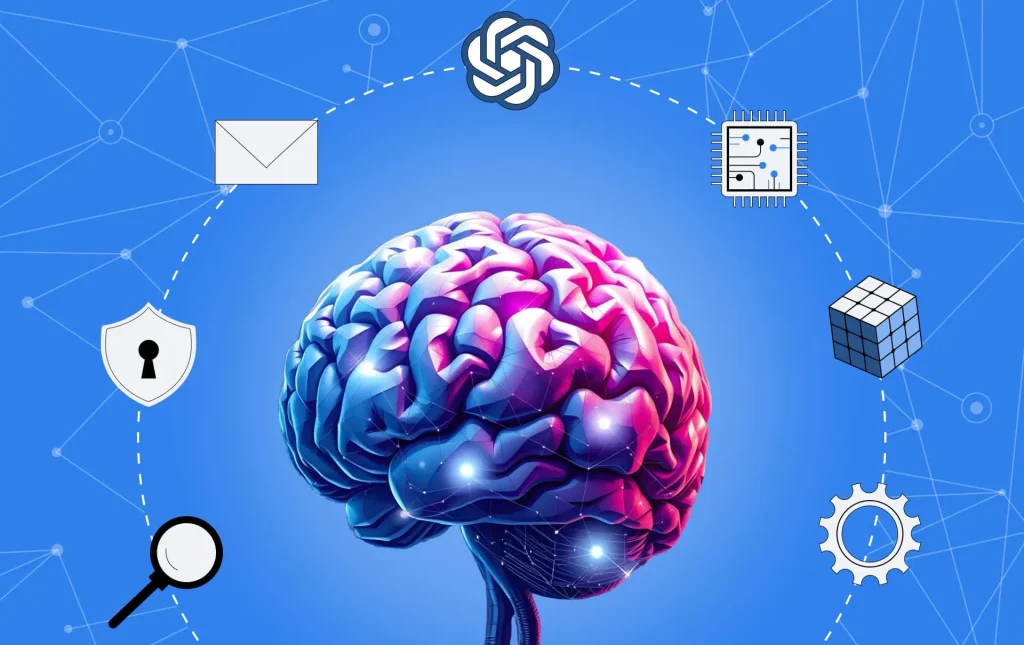
⚙️ HOW THEY WORK (STEP-BY-STEP PROCESS)
These systems function through a continuous loop consisting of perception, reasoning, decision-making, action, and learning.
AI Agents operate through a structured cycle that includes perception, reasoning, decision-making, and action. These AI Agents continuously process information, evaluate options, and improve performance over time through feedback and learning
Perception Stage
In this stage, the system collects information from its environment. Data can come from multiple sources such as user inputs, APIs, sensors, databases, or external applications.
The goal is to gather as much relevant information as possible so the system can understand the situation accurately. Without proper data collection, intelligent decision-making is not possible.
Reasoning Stage
Once data is collected, the system processes it to extract meaning and context. It identifies patterns, understands user intent, and breaks complex problems into smaller, manageable steps.
For example, when a user asks a question, the system analyzes the query, identifies keywords, and determines the best approach to generate an answer.
This stage represents the “thinking” part of the system where raw data is converted into structured understanding.
Decision-Making Stage
After analyzing the situation, the system evaluates different possible actions. It compares outcomes, checks probabilities, and selects the most effective solution based on predefined goals or learned behavior.
This step is crucial because it determines the accuracy and usefulness of the final output. Better training leads to smarter decisions.
Action Stage
In this stage, the system executes the selected decision. This may include generating text, sending responses, calling APIs, updating databases, or triggering external workflows.
This is where theoretical processing becomes real-world output.
Learning Stage
Advanced systems continuously improve by analyzing feedback and performance history. They learn from mistakes, adapt to new patterns, and refine their decision-making process over time.
This makes them more accurate and efficient the more they are used.
This continuous cycle allows AI Agents to function intelligently in real-world environments. Over time, AI Agents become more accurate as they learn from past interactions and improve their decision-making process.
🧩 TYPES OF INTELLIGENT SYSTEMS
Different categories exist based on capability and complexity.
Simple Reactive Systems
These systems respond only to current inputs without memory or learning ability. They are fast but limited in intelligence.
They are commonly used in basic filtering systems, simple bots, and rule-based applications.
Model-Based Systems
These systems maintain internal memory of previous interactions. This allows them to make better decisions based on historical context.
They are widely used in navigation tools, smart assistants, and recommendation systems.
Goal-Oriented Systems
These systems are designed to achieve specific objectives. They evaluate multiple possible paths and choose the most efficient route toward their goal.
They are commonly used in logistics planning, gaming systems, and automated decision tools.
Learning Systems
These systems improve automatically through data exposure and user interaction. They are capable of adapting to new environments and improving accuracy over time.
Examples include recommendation engines, personalization systems, and adaptive assistants.
Fully Autonomous Systems
These are advanced systems capable of executing complex, multi-step tasks independently using external tools, APIs, and integrations.
They represent the closest form of digital employees in modern technology.

🌍 REAL-WORLD APPLICATIONS
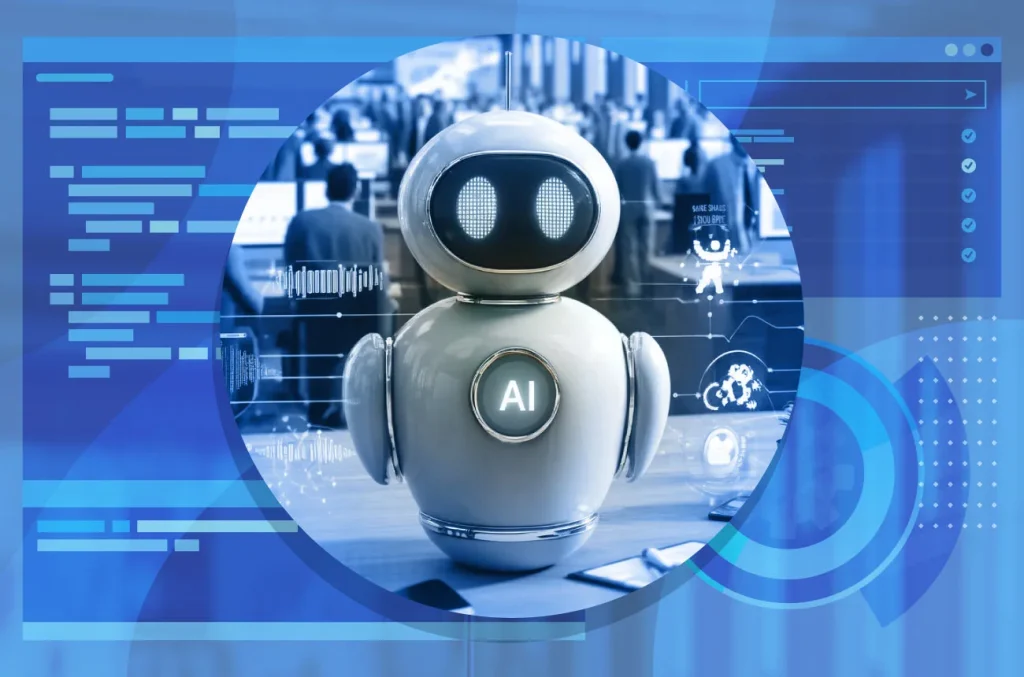
AI Agents are widely used across multiple industries because of their ability to automate tasks and improve efficiency. In modern digital systems, AI Agents play a key role in business operations, customer service, marketing, and software development.
These systems are now deeply integrated into multiple industries.
These systems are now deeply embedded in real-world industries, changing how businesses operate at every level.
In the e-commerce industry, intelligent systems help recommend products based on user behavior, search history, and preferences. This increases conversion rates and improves customer satisfaction by showing highly relevant items.
In the banking sector, these systems are used to detect fraudulent transactions in real time. They analyze spending patterns and instantly flag unusual activity, helping prevent financial losses.
In healthcare, they assist doctors by analyzing patient data, medical history, and symptoms to support diagnosis. While they do not replace medical professionals, they significantly improve decision-making speed.
In education, intelligent systems are being used to create personalized learning experiences. Students receive customized study material based on their learning speed and performance.
This wide adoption shows how important AI Agents have become in today’s digital economy, as AI Agents continue to replace repetitive manual work.
Business Operations
They automate repetitive tasks such as email responses, customer queries, data entry, reporting, and workflow management. This significantly reduces manual workload.
Marketing and Digital Growth
They assist in SEO optimization, keyword research, content generation, ad optimization, and audience targeting. This allows businesses to scale faster with less effort.
Customer Support
They provide instant responses, resolve common issues, and escalate complex cases to human agents when necessary. This improves customer satisfaction and reduces response time.
Software Development
Developers use them to write code, debug errors, generate documentation, and test applications more efficiently.
Healthcare and Finance
They help in diagnostics, fraud detection, risk analysis, and decision support systems, improving accuracy and reducing operational risk.
Education and Research
They assist students and researchers in gathering information, summarizing content, and generating insights quickly.
💡 BENEFITS OF INTELLIGENT SYSTEMS
These systems provide several major advantages:
- Faster execution of tasks compared to manual processes
- Reduced operational costs for businesses
- Ability to handle large-scale automation
- Improved accuracy and consistency
- Smarter data-driven decision-making
- Continuous performance improvement over time
- 24/7 availability without downtime
- Scalability across industries and workflows
🛠️ HOW TO BUILD THEM (STEP-BY-STEP GUIDE)
Building such systems requires structured planning and execution.
Step 1: Define Purpose
Clearly identify what the system should achieve, such as customer support, automation, analysis, or content creation.
Step 2: Choose Tools and Frameworks
Select appropriate technologies such as machine learning models, APIs, and AI development frameworks.
Step 3: Provide Data and Access
The system requires structured data sources, APIs, and knowledge bases to function effectively.
Step 4: Build Decision Logic
Design how the system will interpret input, process information, and select actions.
Step 5: Test and Optimize
Run real-world tests, measure performance, and continuously improve accuracy and efficiency.
🚀 FUTURE OUTLOOK
The future of intelligent systems is extremely promising. We are moving toward a world where digital systems will operate independently, manage complex workflows, and collaborate with humans in real time.
In the coming years, entire organizations may rely on automated systems to handle operations, decision-making, and customer interaction. Multi-agent collaboration will become common, where multiple intelligent systems work together to solve large-scale problems.
This transformation will redefine industries, job roles, and digital ecosystems globally. Humans will increasingly shift toward supervision, creativity, and strategic decision-making while automation handles execution.

🧾 Final Thoughts
Intelligent systems are no longer a future concept; they are actively transforming the digital world today. From automation to decision-making, they are becoming essential tools for businesses and individuals.
Understanding this technology provides a significant advantage in the modern economy. As adoption continues to grow, those who learn and implement these systems early will benefit the most.
The future belongs to intelligent automation, and these systems are leading that transformation.
If you found this guide helpful, leave a comment below and share your thoughts on AI Agents, and don’t forget to share this article with others who want to learn about this technology. And don’t forget to follow us on facebook for new tips.


Leave a Reply